商品分類
搜尋結果
共
32
筆符合商品
排序

奈良大佛與重源肖像:日本中古時期佛教藝術的蛻變
平安末期,源平爭霸之際,平家武將率領大批騎兵自京都長驅直入故都奈良,將國家佛教的信仰中心東大寺與興福寺,泰半夷為廢墟,史稱「南都(奈良)燒討」。朝廷對此血腥破壞大為震駭,下令重建東大寺建築與大佛像,希望藉此穩定國家政體,撫慰亡魂。
1181年8月,重源接受天皇的命令,募款修復東大寺。鑑於他的家庭背景、宗教素養、中國知識,以及擁有的人脈,選擇重源完全合理。接下來二十五年,重源不斷哄騙日本統治者提供他越來越多的權力、金錢及物資,來完成計畫。重源雇用許多大木匠師、藝術家與匠師讓計畫成形,而他變身成為外交家、募款人與承包商。他還遠赴鄉間去搜集原料。然而最重要的是,他以僧人身分主導法會儀軌,賦與這項計畫精神意義,將藝術品轉化為具有神聖力量的法器。天皇為獎勵重源功勞,賜予「大和尚」的尊稱,雕刻了他的肖像以示尊崇。重建工程開啟了一百年劇烈的文化騷動。重源時代創造的佛教藝術,包括雕像、繪畫、法器和建築,呼應了當時的國家精神與社會熱望,充滿驚人的生命力與表現力。
●作者簡介
羅森福 (John M. Rosenfield)出生美國德州,愛荷華大學碩士,哈佛大學藝術史博士(1959)。任教母校藝術史系(1965~1990)專攻印度佛教藝術,博士論文出版為《貴霜王朝藝術》(The Dynastic Arts of the Kushans, 1967)隨即前往京都學習日本美術,研究範圍涵蓋日本各時期佛教藝術,同時也發表關於德川幕府(江戶)時期建築、雕刻與町人美術研究。1988年榮獲日本政府旭日章賞,2001年山片蟠桃賞Yamagata Banto Prize,2012年美國史密森尼學會弗瑞爾獎章(Charles Lang Freer Medal)以表彰他對日本文化的貢獻。
●譯者簡介
顏娟英現任中央研究院史語所研究員(1995.8至今) 美國哈佛大學藝術史博士
台灣大學歷史系藝術史組碩士,堪薩斯大學藝術史碩士,哈佛大學藝術史博士。曾任職國立故宮博物院(1975~1977),加州大學洛杉磯分校(1985.1~7),中央研究院歷史語言研究所(1986迄今),中央大學藝術學研究所(2001~2003借調)。 研究領域主要分為中國與臺灣。中國美術史研究重點在中古時期的佛教藝術史,出版《鏡花水月》(2016);台灣美術史出版《風景心境--臺灣近代美術文獻導讀》(2002),《臺灣近代美術大事年表》(1998)。
作者
NT$
$2,125
|
85折

鏡花水月:中國古代美術考古與佛教藝術的探討
本書共收錄十二篇文章,發表時間歷從1987年到2008年。除了首章〈唐代銅鏡文飾之內容與風格〉側見唐代盛世的藝術發展外,有八篇以中古時期佛教藝術為研究對象。另有二篇是針對佛教美術考古的研究方法進行檢討與省思,以及一篇拓片整理側記。 九〇年代的佛教藝術學界以石窟研究為中心,作者運用考古學、圖像學的研究取徑,以及親身田野調查,根據佛教美術跨越時、空的特質,以宏觀視野進行議題研究。本書一開始以唐代銅鏡文飾風格、與武周時期長安七寶臺雕刻研究等三篇文章,架構初盛唐圖像風格與當時社會、文化、政治的關係。為了釐清後武周時期的佛教藝術發展,再進一步作縱向朝代延伸,橫向跨地域研究圖像風格。並試圖從單純圖像研究,走入信仰背景的探討,進一步復原或探究石窟的宗教功能。本書也收錄一篇針對九〇年代日本學界對於北齊「法界人中像」的論戰,試圖釐清始末後提出自己的觀點。最後一篇則提出拓片資料的重要性,由於中國佛教造像具有強烈的公眾性,石窟與造像碑皆然,故拓片研讀對於該時代的政經社會情況提供了更全面的認識。 作者於1977年赴美留學,在中國未開放的年代便進入國境田野調查,親身觀察作品,更運用圖像學進行研究,同時也重視文獻、經典的掌握。另一方面,身處西方教育環境必須接觸歐洲歷史文化而視野大開,故觀察視角恢弘,論題目標明確且研究深入。各篇敘述邏輯清晰,加上簡練暢達的文筆,使讀者閱讀流暢,能跟隨作者之眼,探索佛教藝術的歷史時空,享受獲取知識的種種樂趣。
●作者簡介
顏娟英現任中央研究院史語所研究員(1995.8至今) 美國哈佛大學藝術史博士 ◎經歷 中央研究院歷史語言所副研究員(1986.9–1995.8) 國立臺灣大學藝術史研究所兼任副教授(1988–1995),兼任教授(1995–) 中央研究院歷史語言所考古學組主任(1996.8–2001.3) 國立中央大學藝術學研究所所長(2001.8–2003.7) ◎學術榮譽 2002年行政院新聞局圖畫類圖書著作金鼎獎:《風景心境——臺灣近代美術文獻導讀》 2003年行政院國科會傑出研究獎
作者在臺灣大學研究所時期曾跟隨江兆申先生修研,畢業後在國立故宮博物院書畫處工作一年餘。1977年辭去故宮工作赴美留學。途中曾於京都與東京短暫停留,在此期間,觸動作者對佛教藝術的嚮往。
留美時期,先進入堪薩斯大學,遇見了席克曼(Laurence Sickman)教授,從零開始學習美術考古與佛教藝術,獲得無限啟發。1979年進入哈佛大學,深受佛教藝術學者羅森福(John Rosenfield)教授治學態度的影響,同時鍛鍊出寬廣的學術視野。
1986年返回臺灣,進入中央研究院史語所從事研究工作;同時接受張光直教授的邀請,加入其主持的臺灣史田野工作室,在1988年展開臺灣美術史的田野調查,拓展全新領域,持續至今,成為重要的臺灣美術研究者。另方面,繼續深入研究中古佛教美術並持續發表研究論文,成為華人當代最具影響力的佛教藝術史學者之一。兩項研究領域皆成績斐然。
作者
NT$
$1,148
|
85折
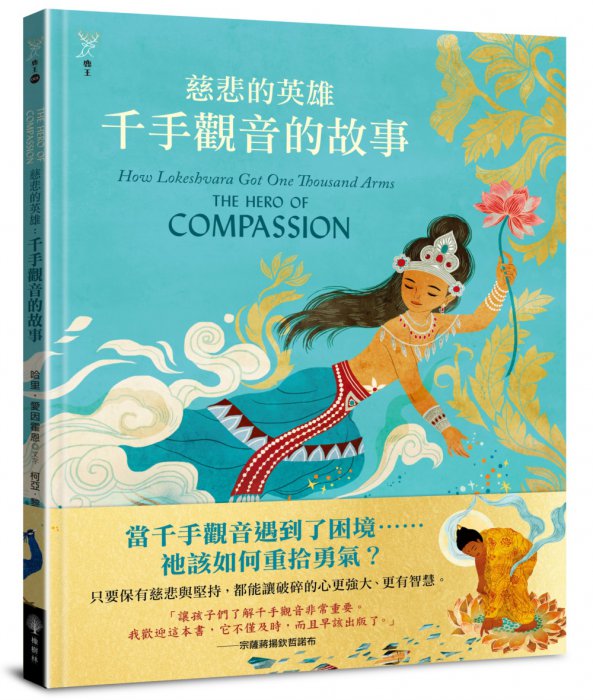
慈悲的英雄:千手觀音的故事
──這是一個學會關愛他人、永不放棄的奇幻故事──全台第一本千手觀音神祇繪本‧榮獲2023美國國家育兒出版獎(NAPPA)當千手觀音遇到了困境……祂該如何重拾勇氣?只要保有慈悲與堅持,都能讓破碎的心更強大、更有智慧。聖觀世音是生活在月球上、富有同情心的英雄。他試圖幫助世界上每個人,但當意識到自己無法拯救所有人時,便感到無比沮喪且無助。因為失去助人的信念,使他的身體爆炸成一千塊碎片。在睿智的良師益友——阿彌陀佛的開導下,這些碎片以比以前可以造福更多眾生的方式重新組合在一起,千手觀音便由此誕生。在現實社會中,一雙手,也許沒辦法把事情做得很好;一雙眼,也許可能沒辦法把事情端詳透徹。但故事中告訴我們,如果願意付出所擁有的一切、投入自身全部的力量,或許我們就能夠讓事情結果變得不一樣!擁有猶如千手千眼觀音的力量。本書特色:◎勉勵讀者不畏失敗、跌倒了再爬起來。聖觀世音的強韌意志,展現即使面對困境,我們總能撿起破碎的心,比以前更堅強、更有愛心、更聰明。或許現實人生中要做到此種胸懷很困難,但可以透過繪本讓小孩子從小學習、耳濡目染,甚至能讓大人重新思考自己是否已被現實社會改變了善良的初心。◎融入佛教中助人、慈悲等利他思想。透過簡單的故事完整描述觀音悲天憫人、胸懷大愛的精神,傳遞給讀者造福他人、發善的美德。◎繪圖精緻生動,引領各年齡層讀者深入觀音的故事中。書中精美的插圖,採用獨特的色彩、陰影和透視等繪畫技巧,喚起讀者對神話和奇蹟的感受。不限年齡的畫風,也能讓喜愛繪本的成人讀者有收藏的衝動!
作者簡介
哈里‧愛因霍恩 Harry Einhorn哈里.愛因霍恩是一位多學科藝術家、教育家和佛教徒,現居台北。他在西北大學接受過戲劇和戲劇教育培訓,曾在魯賓博物館和哈克博物館擔任博物館教育工作者,為世界各地的博物館和公司領導講解故事和參與的研討會。目前,他在華梵大學佛教藝術系擔任講師,教授佛教音樂、西藏圖像學和佛教英語等課程。作為一名藝術家,他熱衷於以藝術和文化將古老的智慧傳統與現代生活相融合,並創作音樂、舞蹈和裝置藝術探索佛教教義的作品。他曾在印度、法國、巴西、台灣和美國的佛教靜修會中進行協調和教學。
繪者簡介
柯亞.黎Khoa Le柯亞.黎是一位插畫家、平面設計師和作家, 畢業於胡志明市美術大學。 她出版了幾本屢獲殊榮的兒童讀物,其中四本是她自己撰寫和繪製。 並曾多次在越南、香港、新加坡和韓國等地舉辦展覽。│曾獲獎項│2015 年 SAMSUNG KIDSTIME AUTHORS'' AWARD 大獎2017 年 Scholastic PICTURE BOOK AWARD 亞軍(新加坡 Scholastic Asia)2020 年北極光圖書獎最佳插畫家類別獲獎者(The Lonely Polar Bear - Happy Fox Books出版)悉尼泰勒圖書獎(SYDNEY TAYLOR BOOK AWARDS) - Picture Book Honor (Miriam at the River - Kar-Ben Publishing出版)TOKA BOX TOP 南亞童書 - 最佳插圖(Sugar in Milk - Hachette Book Group出版)她對旅行充滿熱情,渴望了解不同的文化,渴望發現世界的美麗,這對她來說非常鼓舞人心。 目前和她的貓一起居住在胡志明市。
譯者簡介
李瓊絲文字工作者,淡江大學英文系畢業,威斯康辛大學新聞大傳所碩士。從小編到老編,一路走來,編過雜誌做過書。從文學類到生活類到身心靈書籍,驀然回首,已經從憂鬱青年走過哀樂中年,跨入追求慢活的初老。願與書同老,活到老學到老。
譯者
李瓊絲
NT$
$323
|
85折

(英文版)雜阿含經研究論文集 Research on the Saṃyukta-āgama
This is the fourth volume of proceedings of the Āgama seminars convened by the Āgama Research Group at the Dharma Drum Institute of Liberal Arts (formerly Dharma Drum Buddhist College). It comprises nineteen studies, contributed by eighteen different scholars, on various themes related to the Connected Collections of discourses (suttas, sūtras) — Saṃyutta-nikāya in Pali, Saṃyukta-āgama in Sanskrit — transmitted by different early Buddhist lineages of reciters, preserved in their Indic originals in Gandhari, Pali and Sanskrit as well as in Chinese and Tibetan translations. This research draws attention to fundamental methodological points posed by the study of these scriptural collections as windows into the formation of early Buddhist texts and the organisation of their transmission.
作者簡介
About the editor:Bhikkhunī DhammadinnāDharma Drum Institute of Liberal ArtsAbout the contributors:Oskar von HinüberAlbert-Ludwigs-Universität FreiburgBhikkhu AnālayoUniversität HamburgRupert GethinUniversity of BristolRichard SalomonUniversity of WashingtonMark AllonUniversity of SidneyJoseph MarinoUniversity of WashingtonJin-il Chung (鄭鎮一)Akademie der Wissenschaften zu GöttingenPeter Skilling (Bhadra Rujirathat)École française d’Extrême-OrientJens-Uwe HartmannLudwig-Maximilians-Universität MünchenYao Fumi (八尾 史)Waseda Institute for Advanced StudiesBhikkhunī DhammadinnāDharma Drum Institute of Liberal ArtsBhikkhu PāsādikaAcadémie bouddhique Linh-SonBhikṣu Huimin (釋惠敏)Dharma Drum Institute of Liberal ArtsTaipei National University of the ArtsKarashima Seishi (辛嶋 靜志)The International Research Institute for Advanced Buddhology at Soka UniversityMarcus BingenheimerTemple UniversityKen Su [Su Jinkun (蘇錦坤) ]Āgama Research GroupChoong Mun-keat (鍾秉潔) [Wei-keat (煒傑)]University of New EnglandStefania TravagninRijksuniversiteit Groningen
作者
NT$
$686
|
78折

小沙彌遇見劉墉(圖文繪本、中英對照)
劉墉寫給所有人的生活禪圖文相輔,親切,妙趣,好讀。晨間或睡前十分鐘讀一則,朗讀出聲,撫平情緒,找回平常心。當世界躁鬱,故事的力量,讓我們安靜、精進。當日子懷憂,會心一笑、轉念一想,天寬地闊。
星雲大師向大家推薦:「劉墉先生藉由老和尚的佛法、人生經驗,以簡短巧妙的譬喻教導小沙彌,引導閱讀者擁有正確的人生觀,在面對多變的現實生活,不致迷失方向,以智慧跳脫困境,得到解脫自在。」「每篇文章搭配彩色水墨畫,柔和細膩的色調,加上活潑生動的布局,增強故事的張力,讓閱讀者多了圖像的思考空間,相信大家一定會很喜愛。」☉劉墉首次結集並手繪20篇小沙彌的故事。☉中、英文對照,具跨域的多元視野。☉不說理、不說教,觸動大人心中住著的小孩。☉適合親子共讀,安頓情緒,啟動想像力。人間很煩,人心很累,生活中充斥各種負面情緒,悲傷、不安、憤怒、討厭、煩惱等等,劉墉以小沙彌的故事,為你開出「心靈處方籤」。利用晨間十分鐘,或睡前十分鐘讀一則,最好朗讀出聲,念中文或英文都可以,同時傾聽自己的聲音,得到與冥想相同的淨空、療癒效力。輕鬆跨越低落的情緒,重整心靈,找回冷靜的判斷力。如果是親子共讀,就一起朗讀吧,父母可以進一步和孩子共同討論,印證日常生活的道理。我們都是故事,文字淺、寓意深,讀到會心一笑,日日便是好日,時時就是好時。讓我們先來開始聽劉墉說故事──小沙彌跟師父坐車出去,天氣很不穩定。小沙彌怨:「一下出太陽,一下陰天。」師父說:不!應該說是我們一下子開進陽光裡,一下子又開出來了。太陽哪天會不出來呢?白天就算颳風下雨,它也躲在雲層後面。所以有什麼不如意,都可以看看天,告訴自己其實太陽等在那兒,就算不照過來,自己也能走進去。走進陽光裡!~~〈走進陽光〉
作者簡介
劉墉聞名兩岸的畫家、作家、教育家。出版文學藝術作品一百餘種,被譯為英、韓、泰、越等國文字,在世界各地個展三十餘次。
作者簡介
劉軒/英譯劉軒是作家、講師、DJ、製作人,也是臺北「軒言文創」的發行人和北京「學問在線」的教育總監。他的著作包括散文、旅遊文學、心理勵志等題材共14本,也是一位有超過25年經驗的製作人和DJ。他致力於用文字、故事、音樂等媒介來推廣積極心理學的概念,幫助人們過更好、更富有成效的生活。劉軒先生畢業於茱莉亞音樂學院先修班、哈佛大學、以及哈佛大學教育學院的心理學教育碩士班。他與家人定居於臺北,他的兩個孩子(千川二寶)最愛聽爺爺在餐桌上講故事。劉倚帆/英譯美國哥倫比亞大學及賓州大學華頓商學院研究所畢業。美國水雲齋文化事業有限公司總經理,致力推廣中華教育、藝術及文學。曾任「字節跳動」美國商業部副總監及「華納兄弟」中國製片部經理。英譯作品有《漢字有意思》、《劉墉的情與藝》及《劉墉畫集》。
作者
譯者
劉軒, 劉倚帆
NT$
$272
|
85折

(英文版) 悟吧!在世界佛教村 Global Buddhist Awakening
Taiwan went through an intense period of social change in 1949. The island's politics, economy, ethnicity …… had undergone considerable change. In response this period of tumultuous change, Master Dong Chu founded the "Humanity" magazine to help people cope.
Seventy years later, "Humanity" had weathered being shelved, relaunched and redesigned. It still continues to publish topics that help people cope with the changes in today's world monthly. As "Humanity" approaches its 70th anniversary, it is encountering a different kind of changing world. 27 June 2018, with the aim of sharing the diversity of spiritual practices, we invited dharma masters from different traditions to share the compassion and wisdom of Buddhadharma. The full texts of the keynote speeches and panels are included in this special issue of " Awakening in the Global Buddhist Village".
"Humanity's" guiding teacher, Master Sheng Yen, dedicated his life to bringing Chinese Chan Buddhism to the West. Many Westerners who became his students twenty to thirty years ago continue to follow his footsteps, engage in self cultivation and teaching, establish centers and transmit the lineage. How did they discover Chan Buddhism and how did they find their teacher, Master Sheng Yen? These stories of the teacher and the student are very inspirational.
In the twenty first century, on this 70th anniversary of "Humanity" magazine, Buddhism has spread around the world resembling a global Buddhist village. From the United States of America, Bhikkhu Bodhi described his process of transformation from a traditional monastic to that of a social advocator because he witnessed the oppression of human beings caused by the current social systems; to Italy's Bhikkhun? Dhammadinn? who shared about her journey of how she went from learning dancing to engaging in Buddhist research and ultimately to becoming a female monastic.
Contributing to the world in our capacity of Chinese Chan Buddhism, "Humanity"70 along with the Buddhist Dharma family all over the world and our friends on the same path, let us "Awaken in the Global Buddhist Village"!
About the Humanity magazine
Founded in 1949, Humanity magazine was the first Buddhist magazine published and released in Taiwan. Founded by Ven. Dong Chu and later continued by his disciple Master Sheng Yen, it has been one of the most influential magazines in Taiwan’s Buddhist circles.
Humanity magazine concerns itself about contemporary development of Buddhism, and puts an emphasis on the uplifting of people’s minds and spiritual lives. Each month’s topic not only touches upon various social phenomena, but also explores from Buddhist concepts to worldly studies, to encourage readers to search their inner beings and incorporate Buddhist practice into their daily lives. For cover and layout design, the magazine has invited outstanding illustrators to help render an elegant yet fun style, thus through pages allowing readers to slow down and find a space for spiritual relaxation, self-transformation, and the enjoyment of purity and freedom by applying the Dharma in life.
The magazine had been discontinued for a while due to Master Sheng Yen’s solitary retreat practice. When it was reissued in 1982, as an encouragement, he wrote:
Seek progress in the ordinary life and see the glory of life in hardship.
Seek development in harmony and see the hope in the hard work.
Seek abundance in peace and calm and see the solemness in the training.
Seek wisdom in silence and see the compassionate aspiration in the proactive commitment.
In the future, the Humanity magazine will continue to uphold Master Sheng Yen’s encouragements and expectations, to keep on sharing Buddhist wisdom and compassion, to help bring brightness and hope to the world.
作者
NT$
$406
|
78折

The Infinite Mirror 寶鏡無境(英文版)
Here is the inimitable Master Sheng Yen at his best, illuminating the ancient texts of the Chinese Zen tradition to show how wonderfully practical they really are, even for us today. The texts, written by two of the founders of the Ts’ao-tung sect of Chan Buddhism, are poems entitled Inquiry into Matching Halves and Song of the Precious Mirror Samadhi. Both emphasize the Chan view that wisdom is not separate from vexation, and both speak of the levels of awareness through which one must pass on the way to realization. Both are also works of Buddhist philosophy that can serve as guides to spiritual practice for anyone.
作者
NT$
$646
|
85折

〈破魔變〉中英對照校注
《〈破魔變〉中英對照校注》為敦煌寫卷的重要研究,〈破魔變〉講述佛陀成道時,遭逢魔王擾亂修行的故事。變文是受到佛教影響而興起的一種文學體裁,改寫佛經故事,讓故事更通俗易懂,將佛法的精神與意義深印人心,此種講唱佛經的方式,深深影響了中國文學和戲劇的發展。二○一五年七月至二○一七年三月,中華佛學研究所洪振洲教授與根特大學根特佛學研究中心(Ghent Centre of Buddhist Studies at Ghent University)安東平(Christoph Anderl)教授合作主持「中古佛教寫本資料庫編碼」專案,將部分敦煌佛教寫卷進行整理與數位化;二○一七年再設立「敦煌寫卷〈破魔變〉中英對照本專案」,將〈破魔變〉寫卷再次進行校注與整理,並出版本書。為方便中、西方讀者閱讀,書中附有〈破魔變〉寫卷彩圖,並將寫卷內容楷定成現代通用的正字,同時製作異體字表、通假字表,及提供中、英文的校勘與註解,以利讀者參照研究,能深入理解寫卷,感受變文之美,並體會佛法真義。
作者簡介
洪振洲(「中古佛教寫本資料庫編碼」專案主持人)臺灣科技大學資訊管理系博士,法鼓文理學院佛教學系專任副教授兼任圖書資訊館館長。他的研究興趣包含漢譯佛典作譯者分析、數位典藏專案建構、數位人文研究資源開發與數位文字處理議題,目前參與許多由法鼓文理學院執行的數位典藏計畫。安東平 Christoph Anderl(「The Database on Medieval Chinese Dunhuang Texts 」project director)Christoph Anderl is a Professor of Chinese Language and Culture at Ghent University. He has an MA in Chinese Studies from Vienna University, and a PhD in Chinese Linguistics from Oslo University.Anderl's research focuses on Medieval Chinese language and literature, with an emphasis on vernacular texts and Dunhuang manuscripts, Medieval Chan Buddhism, and the interplay of text and image in the transmission of Buddhist narratives.
NT$
$240
|
5折

(英文版) 戒律研究 Vinaya Studies
The present book collects research papers by Bhikkhu Anālayo related to Vinaya. Recurrent topics are the nature of Vinaya narrative and the overlap between discourse and Vinaya material, both of which have significant ramifications for the use of such textual material by the modern scholar. In addition, topics taken up in the course of this book are the legal consequences of pārājika, the mass suicide of monks, the tale of Vessantara's lavish giving, the impact of the account of the first saṅgīti on attitudes towards Vinaya rules, the account of the foundation of the order of bhikkhunīs, and the legal dimensions of the revival of the bhikkhunī order.
作者簡介
Bhikkhu Anālayowas born in Germany in 1962 and ordained in Sri Lanka in 1995. He completed a Ph.D. thesis at the University of Peradeniya (Sri Lanka) in 2000 and a habilitation thesis at the University of Marburg (Germany) in 2007. At present he is a professor at the University of Hamburg, Numata Center for Buddhist Studies (Germany).
作者
NT$
$351
|
78折

(英文版) 長阿含研究Dīrgha-āgama Studies
The present book collects research papers by Bhikkhu Anālayo containing translations of Dīrgha-āgama discourses and comparative studies of their Pāli parallels (as well as relevant Sanskrit fragments), together with three appendices. Several chapters and the appendices are devoted to examining aspects of the early Buddhist oral transmission. In addition, topics taken up in the course of this book are the analysis of views in the Brahmajāla, healing in early Buddhism, the Buddha's last meditation, his display of fire miracles, levitation, debating strategies, and the future Buddha Maitreya.
作者簡介
Bhikkhu Anālayowas born in Germany in 1962 and ordained in Sri Lanka in 1995. He completed a Ph.D. thesis at the University of Peradeniya (Sri Lanka) in 2000 and a habilitation thesis at the University of Marburg (Germany) in 2007. At present he is a professor at the University of Hamburg, Numata Center for Buddhist Studies (Germany).
作者
NT$
$546
|
78折

(英文版) 中阿含經研究論文集 Research on the Madhyama-āgama
This is the third volume of proceedings of the Āgama seminars convened by the Āgama Research Group at the Dharma Drum Institute of Liberal Arts (formerly Dharma Drum Buddhist College). It collects academic contributions on various aspects related to the Middle-length Collec¬tions of discourses (sūtras, suttas) transmitted by different early Buddhist lineages of reciters, preserved in their Indic originals in Gandhari, Pali and Sanskrit as well as in Chinese and Tibetan translations.
作者簡介
About the editor:Bhikkhunī DhammadinnāDharma Drum Institute of Liberal Arts
About the contributors:
Mark Allon & Blair SilverlockUniversity of Sydney
Bhikkhu AnālayoUniversity of Hamburg
Roderick S. BucknellUniversity of Queensland
Jin-il Chung(鄭鎮一)Göttingen Academy of Sciences
Takamichi Fukita(吹田隆道)Bukkyō University
Jen-jou Hung(洪振洲)Dharma Drum Institute of Liberal Arts
Seishi Karashima(辛嶋靜志)The International Research Institute forAdvanced Buddhology at Soka University
Michael RadichVictoria University of Wellington
Richard SalomonUniversity of Washington
Peter SkillingÉcole française d’Extrême-Orient
Ingo StrauchUniversity of Lausanne
作者
NT$
$351
|
78折

(英文版) 增壹阿含研究 Ekottarika-āgama Studies
The present book collects research papers by Bhikkhu Anālayo with translations of Ekottarika-āgama discourses and comparative studies of their Pāli parallels, together with three appendices on the terms Mahāyāna, Hīnayāna, and Theravāda. Several papers study aspects of the Ekottarika-āgama as a collection distinct from other Nikāya and Āgama collections. In addition, topics taken up in the course of this book are seclusion, the lion's roar, the wheel-turning king, Paccekabuddhas, and the four noble truths, as well as depictions of accomplished nuns and their significance.
作者簡介
Bhikkhu Anālayo was born in Germany in 1962 and ordained in Sri Lanka in 1995. He completed a Ph.D. thesis at the University of Peradeniya (Sri Lanka) in 2000 and a habilitation thesis at the University of Marburg (Germany) in 2007. At present he is a professor at the University of Hamburg, Numata Center for Buddhist Studies (Germany).
作者
NT$
$530
|
78折

Liberated in Stillness and Motion 動靜皆自在(英文版)
Live a life of ease and freedom, on the basis of peace and solidity, with the principle of being less agitated and affected.
Many masters in the history of Chinese Chan Buddhism emphasized practice as daily living. Whether monastic or lay, a follower uses the concepts and methods of Chan in daily life. By doing so, one experiences calmness and ease while being spontaneous and lively amidst mundane reality. Chan is not a religion, not a philosophy, and surely not mysterious or weird sorcery. It is the wisdom of living, the cultivation of body and mind, and a principle and guideline for spiritual development. It is also the best method for influencing and purifying the environment.--Master Sheng Yen
作者簡介
Master Sheng Yen (1930-2009)
Master Sheng Yen was born in 1930 and became a monk in 1943. He conducted a six-year solitary retreat, after which he went to Japan for further study and obtained a doctorate in Buddhist literature at Rissho University. In 1975, he began sharing the Dharma in the US, and in 1989, founded the Dharma Drum Mountain organization. In 2005, he established the Dharma Drum Lineage of Chan Buddhism, as an effort to reinvent Chinese Buddhism.
He authored more than 100 publications in Chinese, English, and Japanese, and received the Sun Yat-sen Art and Literary Award, the Sun Yat-sen Academic Award, and the Presidential Cultural Award, among other honorary awards.
He proposed the vision of "uplifting the character of humanity and building a pure land on earth," founded the Chung-Hwa Institute of Buddhist Studies, Dharma Drum Institute of Liberal Arts, and Dharma Drum Sangha University. Experienced in Chan using correct approaches, he guided practice in both the West and East. Popularizing the Dharma in modern language, the Master initiated movements including Protecting the Spiritual Environment, Four Kinds of Environmentalism, the Fivefold Spiritual Renaissance Campaign, and the Six Ethics of the Mind. He shared the Dharma globally with a broadminded perspective, winning him worldwide recognition.
作者
NT$
$281
|
78折

(英文版) 雜阿含研究 Saṃyukta-āgama Studies
The present book collects research papers by Bhikkhu Anālayo with translations of Saṃyukta-āgama discourses and comparative studies of their Pāli parallels, together with two appendices on the relationship between commentary and discourse as well as on the Udāna collection. Topics taken up in the course of the studies are the four noble truths as a diagnostic scheme, concern for the welfare of others, the transfer of merit, humour, Aṅgulimāla, teachings to laity, attitudes towards nuns, arahants and suicide, teaching and awakening, the gender-inclusiveness of the address 'monk', the acrobat simile, mindfulness of breathing, the Buddha's first discourse, self-cremation, and the Buddha's visit to his mother in the Heaven of the Thirty-three.
作者簡介
Bhikkhu Anālayowas born in Germany in 1962 and ordained in Sri Lanka in 1995. He completed a Ph.D. thesis at the University of Peradeniya (Sri Lanka) in 2000 and a habilitation thesis at the University of Marburg (Germany) in 2007. At present he is a professor at the University of Hamburg, Numata Center for Buddhist Studies (Germany), and a researcher at the Dharma Drum Institute of Liberal Arts (Taiwan).
作者
NT$
$484
|
78折

The World of Chan 禪的世界(英文版)
Chan is not necessarily any one thing, nor does Chan affirm or deny anything. However, whatever you need, Chan gives to you.
For regular meditators, this book provides basic sitting meditation techniques. Exceptionally busy people are advised to try and use the Chan cultivation methods in this book to harmonize themselves, and dissolve their attachment to "self." From relaxing the body and mind for as little as three minutes to attending to body and mind throughout daily life, these methods show the simplicity and practicality of expedient Chan methods.--Master Sheng Yen
作者簡介
Master Sheng Yen (1930-2009)
聖嚴法師1930年生於江蘇南通,1943年於狼山出家,後因戰亂投身軍旅,十年後再次披剃出家。曾於高雄美濃閉關六年,隨後留學日本,獲立正大學文學博士學位。1975年應邀赴美弘法。1989年創建法鼓山,並於2005年開創繼起漢傳禪佛教的「中華禪法鼓宗」。
聖嚴法師是一位思想家、作家暨國際知名禪師,曾獲臺灣《天下》雜誌遴選為「四百年來臺灣最具影響力的五十位人士」之一。著作豐富,中、英、日文著作達百餘種,先後獲頒中山文藝獎、中山學術獎、總統文化獎及社會各界的諸多獎項。
聖嚴法師提出「提昇人的品質,建設人間淨土」的理念,主張以大學院、大普化、大關懷三大教育推動全面教育,相繼創辦中華佛學研究所、法鼓佛教學院、僧伽大學、法鼓大學等院校,也以豐富的禪修經驗、正信的佛法觀念和方法指導東、西方人士修行。
法師著重以現代人的語言和觀點普傳佛法,陸續提出「心靈環保」、「四種環保」、「心五四運動」、「心六倫」等社會運動,並積極推展國際弘化工作,參與國際性會談,促進宗教交流,提倡建立全球性倫理,致力世界和平。其寬闊胸襟與國際化視野,深獲海內外肯定。
Master Sheng Yen was born in 1930 and became a monk in 1943. He conducted a six-year solitary retreat, after which he went to Japan for further study and obtained a doctorate in Buddhist literature at Rissho University. In 1975, he began sharing the Dharma in the US, and in 1989, founded the Dharma Drum Lineage of Chan Buddhism.
He authored more than 100 publications in Chinese, English, and Japanese, and received the Sun Yat-sen Art and Literary Award, the Sun Yat-sen Academic Award, and the Presidential Cultural Award, among other honorary awards.
He proposed the vision of “uplifting the character of humanity and building a pure land on earth,” founded the Chung Hwa Institute of Buddhist Studies, Dharma Drum Buddhist College, Dharma Drum Sangha University, and Dharma Drum University. Experienced in Chan using correct approaches, he guided practice in both the West and East. Popularizing the Dharma in modern language, the Master initiated movements including Protecting the Spiritual Environment, Four Kinds of Environmentalism, the Fivefold Spiritual Renaissance Campaign, and the Six Ethics of the Mind. He shared the Dharma globally with a broadminded perspective, winning him worldwide recognition.
作者
NT$
$468
|
78折

(英文版) 長阿含經研究論文集 Research on the Dīrgha-āgama
This is the second volume of proceedings of the Āgama seminars convened by the Āgama Research Group at the Dharma Drum Institute of Liberal Arts (formerly Dharma Drum Buddhist College). On this occasion, the Āgama Research Group met to discuss the early collections of long discourses transmitted by the different Buddhist schools. Thanks to the discovery and ongoing publication of the incomplete Sanskrit Dīrgha-āgama manu¬script from Gilgit, three different versions of the Collec¬tion of Long Discourses are now avail¬able for comparative study: the Pali Dīgha-nikāya transmitted within the Theravāda tradition, the just-mentioned Dīrgha-āgama in Sanskrit, identified as Sar¬vās¬ti-vāda or Mūlasarvāstivāda, and the Chinese translation of an Indic Dīrgha-āgama (長阿含經), generally considered to be affiliated with the Dhar¬ma¬¬guptakas. The six papers collected here focus on research on these various incarnations of the collections of long discourses in comparative perspective.
作者簡介
About the editor:Sāmaṇerī DhammadinnāDharma Drum Institute of Liberal Arts
About the contributors:Bhikkhu AnālayoNumata Center for Buddhist Studies, University of Hamburg &Dharma Drum Institute of Liberal Arts
Roderick S. BucknellUniversity of Queensland
Toshiichi Endo (遠藤敏一)Centre of Buddhist Studies,The University of Hong KongJens-Uwe HartmannLudwig-Maximilians-Universität of Munich
Jen-jou Hung (洪振洲)Dharma Drum Institute of Liberal Arts
Seishi Karashima (辛嶋靜志)The International Research Institute for Advanced Buddhologyat Soka University
作者
NT$
$250
|
78折

The Poetry of Enlightenment 開悟的詩偈(英文版)
To my knowledge there are no anthologies of Ch’an poetry in Chinese, Japanese or English which describe in detail the method of practice and the experience of Ch’an Furthermore, there are few prose sources in English dealing with the same topics On the other hand, there are numerous books in English that relate the episodes of the kung-ans(koans)The prevailing view that comes from reading these stories is that the practice of Ch’an is methodless, and since there is no way to describe the experience of Ch’an, it is suggested that we just go ahead and practice by studying the kung-ans The purpose of these poems is different in that they specifically show you how to practice, what attitudes to cultivate and what pitfalls to beware of Finally, they attempt to describe the ineffable experience of Ch’an itself These poems flow directly from the minds of the enlightened Ch’an masters; we get a glimpse into their experience at the time of, and after their enlightenment In contrast, in reading a kung-an we get an objective story of what happened and we don’t really know what was in their minds. It is my hope that this collection of poems will give those who are interested in the practice a new way of looking at Ch’an and a more balanced view of the scope of Ch’an literature The present selection is offered to make this tradition available to Western readers who may otherwise not be aware of their existence.
NT$
$536
|
85折

Footprints in the Snow : The Autobiography of a Chinese Buddhist Monk (雪中足跡英文版精裝)
Master Sheng-Yen has devoted much of his life to spreading the teachings of Chinese Buddhism—a practice that antedates the more familiar Japanese and Tibetan traditions—throughout the world. He became known in the United States after he began founding meditation centers here in 1980. Now in his late seventies, he tells the remarkable story of his life and spiritual education in FOOTPRINTS IN THE SNOW. From descriptions of the private world of Buddhist masters to first-hand accounts of Chinese history, it is a rare document that is both an important look at China’s past and a compelling spiritual journey across a lifetime.Sheng-Yen’s story is of a life lived in the last years of the Republic of China, the Sino-Japanese War, and the founding of the People’s Republic of China. An eye-opening slice of modern history as well as an authoritative introduction to an ancient religious tradition, FOOTPRINTS IN THE SNOW will appeal to spiritual seekers, travelers who want to understand more about China, or anyone looking for a fascinating story.
NT$
$893
|
85折

Hoofprint of the Ox 牛的印跡(英文版)
From The Preface By Dan Stevenson EN. SHENG YEH is a master in the Caodong and Linji lineages of Chan〈Zen〉 school, who for twenty five years now has been guiding students from Taiwan, the United States, and Europe in the practice of Chan Buddhism. Hoofprint of the Ox provides a systematic introduction ─ in Sheng yen,s own words ─ to the principles that inform his particular style of Chan training.... In the final analysis, it is an unabashedly normative work ─ a book on Chan practice addressed to an English speaking audience with a personal interest in Buddhism. To the extent that this audience is also primarily Western, Hoofprint is more than passive report of Sheng yen,s personal convictions. It situates those convictions in responsive relation to specific expectations about Chen practice current among Western students, with specific points to be made.
NT$
$1,071
|
85折

觀世音菩薩與現代社會:第五屆中華國際佛學會英文論文集
本書為法鼓山中華佛學研究所主辦,第五屆中華國際佛學會議:「觀世音菩薩與現代社會」之會後論文集,收錄法鼓山創辦人聖嚴法師的開幕致辭〈觀世音菩薩與現代社會〉、于君方教授的專題演講〈觀音菩薩與中國文化〉和與會學者、專家之多篇專文。第五屆中華國際佛學會議─「觀世音菩薩與現代社會」,係由法鼓山中華佛學研究所主辦,於2006年3月舉行,此次會議為慶祝法鼓山落成的活動之一,為法鼓山世界佛教教育園區歷史的里程碑之一。本佛學會議英文論文集共收錄了法鼓山創辦人聖嚴法師的開幕致辭、于君方教授的專題演講和其他九位國外與會學者專家之英文論文,例如︰Jose Ignacio Cabezon, Edward Crangle, Jeffrey Hopkins, Miriam Levering, Jan Nattier, Shunzo Onoda, Petra Hildegard Rosch, Dorothy C.Wong, Shi Zhuru等等。
作者簡介
作者:釋聖嚴等主編:William Magee、黃繹勳
作者
NT$
$281
|
78折
正在載入更多商品......